
In a city like Los Angeles, luxury living is not defined only by architecture, interior design, or panoramic views. There is another layer that quietly shapes how a home feels and how it is experienced: music. It is often invisible, yet deeply influential, turning physical spaces into emotional environments.
In luxury homes across Los Angeles, music is no longer an accessory. It has become part of the design language itself, shaping mood, enhancing spatial perception, and redefining what comfort and sophistication mean in modern living.
Music as an Invisible Design Element
High-end homes in LA are increasingly designed with sensory experience in mind. While visual aesthetics still lead the conversation, sound has become equally important in shaping atmosphere.
Instead of treating music as something added later, architects and designers are now thinking about:
- How sound travels through open floor plans
- How materials affect acoustics in large living spaces
- How different rooms should “feel” sonically
- How silence itself becomes part of luxury
In this way, music becomes a structural element, not just entertainment.
The Psychology of Sound in Luxury Spaces
Music affects how people perceive space, time, and emotion. In luxury homes, this influence is intentionally used to create layered experiences.
For example:
- Soft ambient music can make large rooms feel more intimate
- Low-frequency tones can add a sense of depth and calm
- Natural soundscapes can reduce the harshness of urban living
- Carefully curated playlists can shift mood throughout the day
In many Los Angeles homes, residents move through different sound environments just as they move through different rooms.
Smart Home Audio Systems and Personalized Soundscapes
Modern luxury homes in LA are increasingly equipped with integrated audio systems that go far beyond traditional speakers.
These systems allow:
- Room-by-room sound control
- Automatic mood-based playlists
- Voice or app-controlled audio transitions
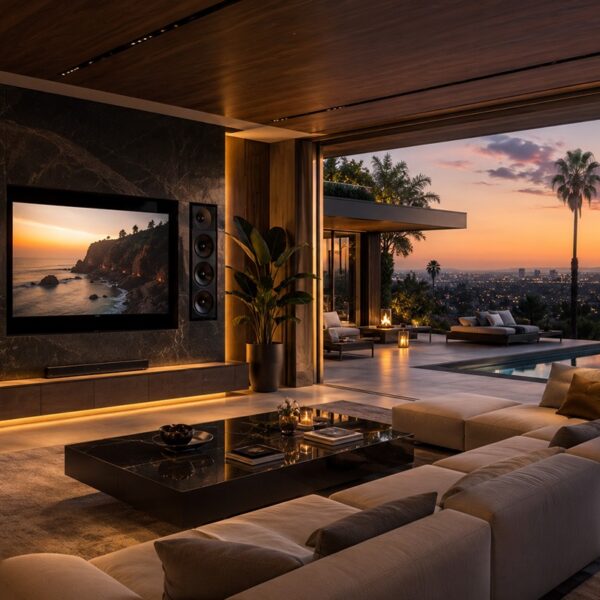
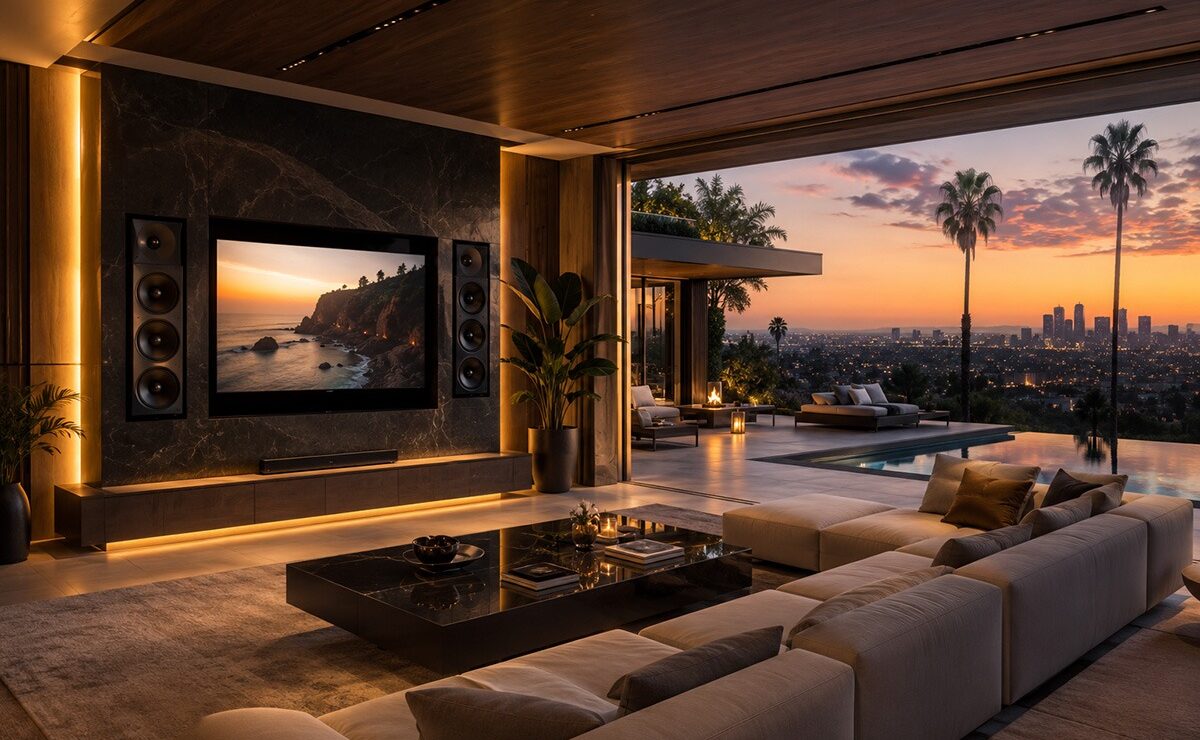
- Hidden speakers built into walls and ceilings
What makes this even more powerful is personalization. Homeowners are no longer just listening to music; they are curating emotional states.
Morning soundscapes might include calm piano or ambient textures, while evening settings shift toward jazz, acoustic, or cinematic tones.
Architecture That Responds to Music
Some of the most advanced luxury residences in Los Angeles are being designed with acoustics as a core architectural priority.
This includes:
- Floating ceilings that reduce echo
- Acoustic panels hidden inside decorative walls
- Materials chosen for sound absorption or reflection
- Open layouts balanced with acoustic zoning
In these homes, music does not simply play inside the space. It interacts with it.
A marble surface might reflect sound differently than a wood-paneled room, changing how the same track feels as you move through the house.
Emotional Luxury: Beyond Visual Aesthetics
Luxury used to be defined primarily by what you could see. Today, it is increasingly defined by what you feel.
Music plays a central role in this shift. It adds emotional texture to:
- Morning routines
- Social gatherings
- Private relaxation moments
- Evening wind-down rituals
A home without sound design can feel visually complete but emotionally flat. In contrast, a well-designed audio environment can make even minimal interiors feel rich and layered.
Social Spaces and Music as Atmosphere
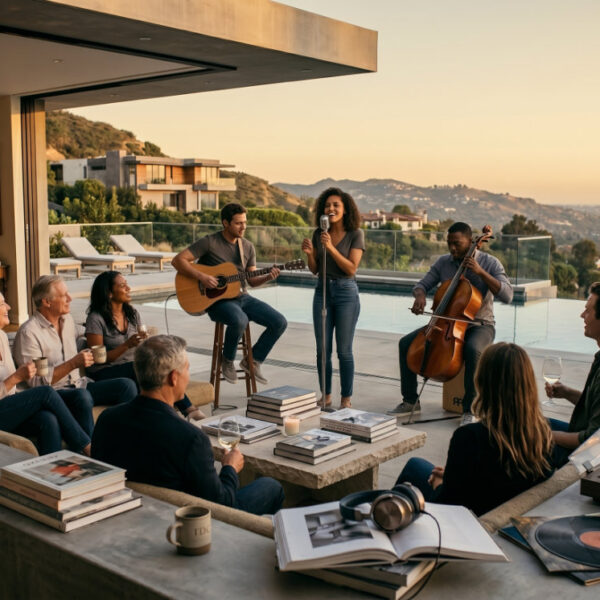
In Los Angeles luxury homes, social spaces such as living rooms, rooftop lounges, and poolside areas often rely heavily on music to define their identity.
Instead of loud or distracting sound, the goal is usually subtle enhancement:
- Lounge music that supports conversation
- Outdoor sound systems that blend into nature
- Transitional playlists that match sunset or evening lighting
- Guest-sensitive volume zoning across different areas
Here, music becomes social architecture, shaping how people interact without directing them.
Wellness and Sound in Modern LA Homes
Another growing trend in luxury living is wellness-focused sound design. Music and sound therapy are being integrated into home environments to support mental clarity and relaxation.
Common approaches include:
- Meditation sound rooms
- White noise or natural sound sleep environments
- Low-frequency sound for stress reduction
- Morning activation sound routines
In a fast-paced city environment, these sound strategies help create emotional balance within the home.
The Future of Music-Integrated Homes
As technology continues to evolve, music in luxury homes is moving toward even deeper integration.
Future developments may include:
- AI-generated adaptive playlists based on mood and activity
- Real-time sound adjustment based on occupancy and movement
- Haptic audio experiences embedded in furniture
- Fully immersive sound environments tied to lighting and climate
In Los Angeles, where lifestyle innovation often leads global trends, the home of the future is not just smart. It is sensorially intelligent.
Conclusion
Music in luxury homes is no longer background decoration. In Los Angeles, it has become a quiet but powerful force that shapes how people experience space, emotion, and daily life.
It influences architecture, enhances wellness, supports social interaction, and ultimately transforms a house into a living emotional system.
The most refined luxury homes are not just seen or visited. They are heard, felt, and experienced through sound.